what to plant in a 4 x 4 garden
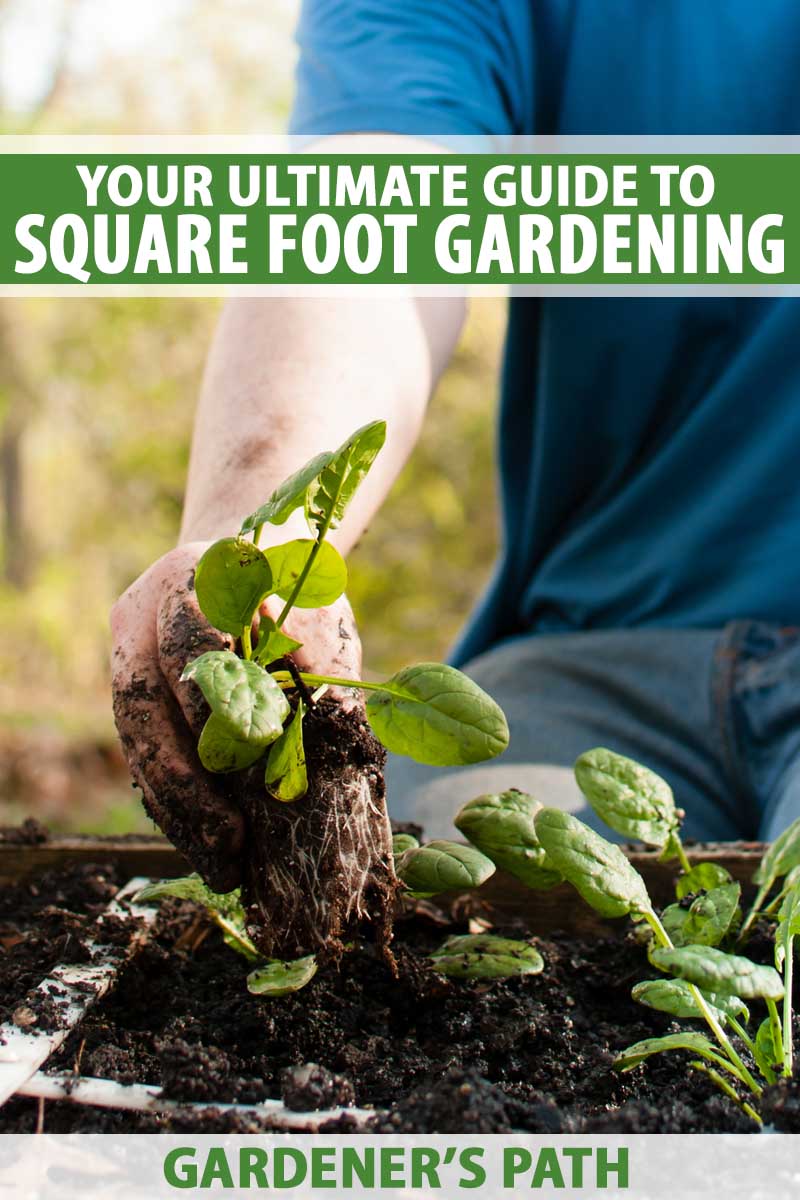
It'southward been a buzzword in the gardening world for decades: the foursquare pes garden, a revolution in small space gardening everywhere.
Information technology doesn't take much imagination to figure out what this basic concept entails.
It involves advisedly measuring gardening plots. Conscientious planning can have a huge impact on how much food you grow, and how much waste you can avoid.
But for traditional gardeners and acolytes of other styles (similar myself), we may need a chip more of a formal intro!
We link to vendors to help yous find relevant products. If you buy from one of our links, nosotros may earn a commission .
What is square foot gardening, and where did it come from? What's so great nigh it? Why practice people however employ the method in gardens today, and why is it so popular?
Sure, it involves the clever use of foursquare foot measurements to go the nearly out of your growing space. Only nowadays, with a burgeoning local food movement and a passion for home growing, knowing all the ins and outs of this ideology means a whole lot more.
Without farther ado, permit'southward dig in and accept a wait!
What You'll Larn
- Square Foot'southward Roots
- What is Foursquare Foot Gardening?
- The Basic Setup
- Growing on the Grid
- What About Perennial Vegetables?
- Fancy Footwork
- Companion Planting Tips
- Square Pes Layout Tips
- Starting Out
- Setting the Pace
So, what is square foot gardening anyway, and where did it come from?
In essence, it is an approach to growing food that incorporates companion planting, intensive spacing, and getting the most food possible out of a small space.
It all started in 1981 equally a concept adult and coined by civil engineer Mel Bartholomew, author of Square Foot Gardening.

Square Foot Gardening, available on Amazon
In his experiences as an urban planner, Bartholomew brought attending to less efficient and productive methods of traditional single-row gardening. A hobby gardener himself, he combined his urban center pattern and planning skills with his green thumb to come up with the always-practical square foot garden – and thus, his book was born.
The book rapidly caught fire as an heady new way to grow more nutrient in small spaces, not only for the average gardener but to too improve health, ergonomics, space utilise, and fifty-fifty food security among populations in need around the globe.
Its beginning edition is known as one of America's bestselling gardening books of all time, with over a one thousand thousand copies sold.
Decades afterward, the book continued to exist top-tier among gardening guides – then continuously purchased, used, and enjoyed, that a long-awaited update of the book was released in 2006 as The All New Square Foot Gardening, followed past a second edition in 2013. Yous'll find it on Amazon.

All New Square Foot Gardening Ii: The Revolutionary Way to Abound More in Less Space
Even now, Bartholomew sporadically updates his concept with new techniques and data to be more than informed with modern gardening methods and fads that befit today'southward gardeners.
A book that is so persistent as a horticultural classic must comprise some kernel of truth, correct? That's exactly the point: this method of gardening is timeless, a classic that's withal relevant at a time when food problems are at the forefront of household concerns.
This led him to release yet another wave of square foot gardening books. Bartholomew's second edition of All New Square Pes Gardening was published in 2013. It explores many of today's hot gardening trends including vertical gardening, pest control, and gardening with your kids.
A volume that is then persistent as a horticultural classic must contain some kernel of truth, correct? That's exactly the point: this method of gardening is timeless, a classic that'due south yet relevant at a fourth dimension when food issues are at the forefront of household concerns.
Even though information technology was conceived decades ago, the essence of its greatness all the same shows in infinite-saving, DIY food production techniques for the home that aren't at all difficult to adopt.
Can you acquire them yourself? Of grade! Let's accept a look at how you can make these methods yours.
Showtime of all – what exactly are the benefits of square human foot gardening? Why is information technology a worthwhile approach to gardening in the beginning place?
For the backyard gardener, or even the newbie to urban homesteading, this perennial method is your perfect food-growing option for more than merely a few reasons:
- Grow as much food inside a small infinite as you would with some traditional row-planted gardens
- Meaty four-by-4 foot raised bed garden makes for easy access
- No need for a big k – grow nutrient on patio, balcony, or smaller plot
- No weeding at all (with the correct setup using weed-free soil mix)
- Less work and strain on the body
- No negative effects or impairment to the yard
- Incredibly easy – ideal for new gardeners
- Save money with minimal management by sourcing your own nutrient
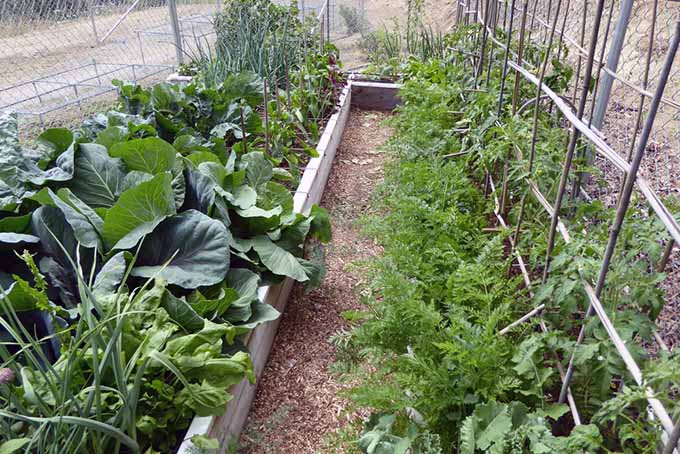
That's right: with this clever gardening approach, you lot are substantially sourcing your own nutrient from tiny spaces, saving yourself money and hardly having to put whatsoever work into information technology!
And no – yous don't need that huge backyard or tiller you one time assumed yous might to get started.
Due to the tight, meaty, yet good for you spacing implemented using this method, you tin competitively produce as much nutrient as you might in a larger space that was planted using less-space efficient row crop methods.
Due to the tight, compact, nevertheless healthy spacing implemented using this method, you tin competitively produce equally much nutrient as you might in a larger space that was planted using less-space efficient row ingather methods.
Sure, traditional row-cropping guarantees healthy plants with ample spacing between rows, but square human foot gardening begs the question: couldn't more than plants be used in those spaces as well?
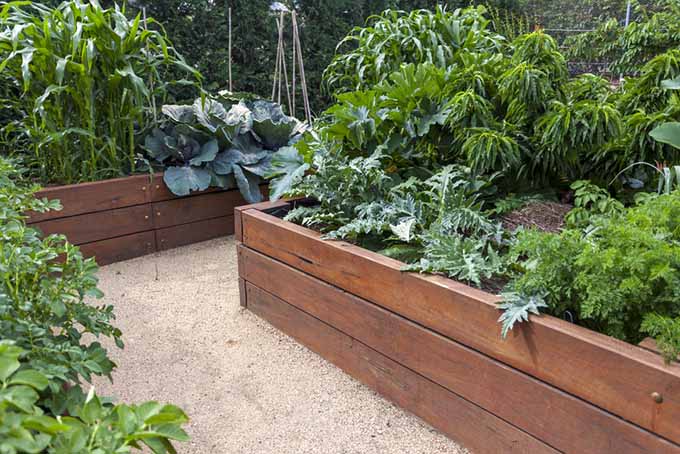
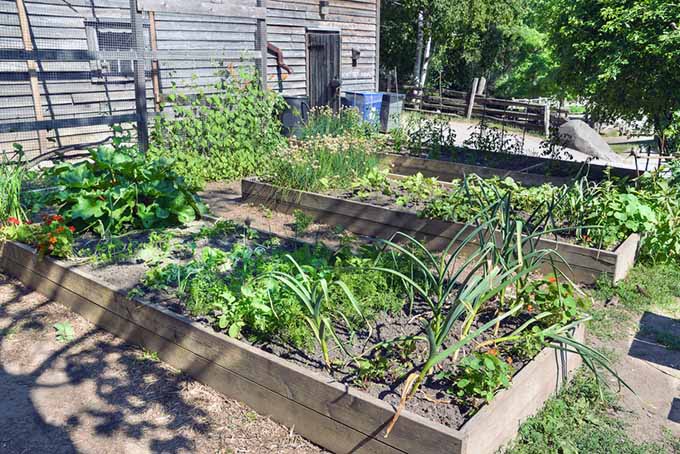
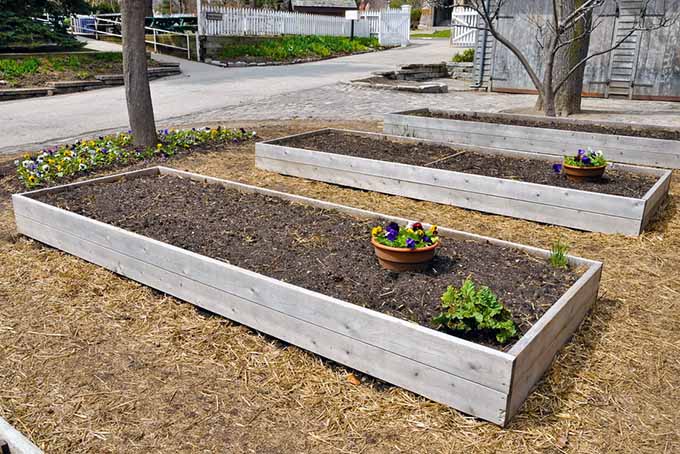
Plus, in a iv×four foot raised bed construction (the method's standard raised bed dimensions), yous don't have to do anywhere near the amount of work required for the in-ground planting of a larger plot.
With the buy or construction of such a bed (whether wood, plastic, fabric, or even DIY from makeshift cinder blocks) and the add-on of a lesser lining, y'all can keep your bed completely weed gratis – thus eliminating out a good chunk of the gardening piece of work entirely.
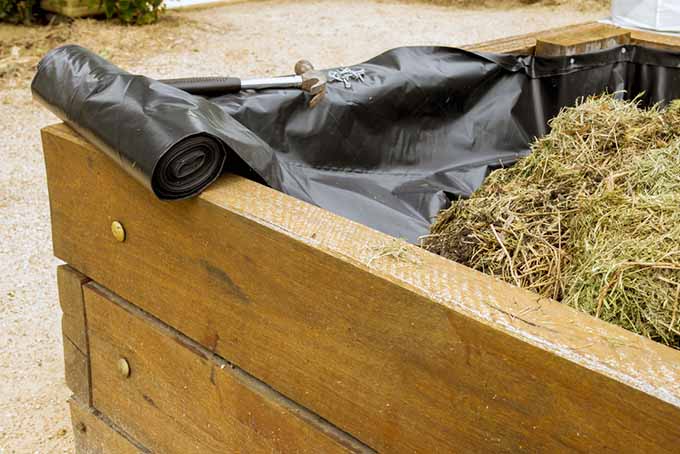
This is especially true if yous add a seed-gratis soil mix rather than planting in soil from your own thou, an of import attribute of Bartholomew'due south method.
The method'due south standard 4-by-4-human foot full raised bed growing infinite is also the perfect size for reaching across to get to just about any spot in the bed, whether for weeding, planting, amending – you name information technology. This is quite the ergonomic option!
Plus, the techniques for setting up and planting are incredibly like shooting fish in a barrel to learn, and can even provide the perfect medium for a beginner who is just starting out on their kickoff adventures in edible gardening.
Of course, anything truly nifty tends to draw at least a little heat! Some critics of the method country that, in spite of its space- and work-saving techniques, startup tin be expensive – the purchase or construction of a raised bed may be costly, as can getting your hands on completely weed-complimentary, nutrient-rich potting soil or compost.
My comeback to that? Certain, you might ring up startup costs in the $100 range (though the initial toll tends to exist much lower if you're a smart bargain-hunter or handyperson), but call back about the ultimate impact on your food budget (and self-confidence that will be gained in growing your own nutrient) over time!
That's right: over fourth dimension, you'll save money on your food budget by growing your own food (while feeling good and healthy about information technology!)
Sourcing your own food straight from your backyard with this method is likewise an excellent way to feel proactive nearly changing your part of the food organization for the better.
By growing an edible garden organically and by using this method in your ain backyard, you're getting produce direct from your own soil at much smaller environmental and health costs, in comparing to the boilerplate grocery shop produce.
The Basic Setup
Square human foot gardening has a time-honored, well-tested place in the gardening world, with many noticeable benefits to gardening and lifestyle.
But what are the special techniques that bring about such awesome results?
At their foundation, they are very basic and ridiculously elementary to learn:
1. Get Your Grow Space
First, build (or buy) a 4-past-4 foot raised bed box (lined with weed barrier landscaping fabric if you want less weeds and you're building on tiptop of other soil).
2. Put In Your Preferred Soil
Fill information technology with fertile potting soil (part peat moss, compost, and vermiculite, or some other mix of your selection – preferably weed gratis).
3. Lay Out Your Grid
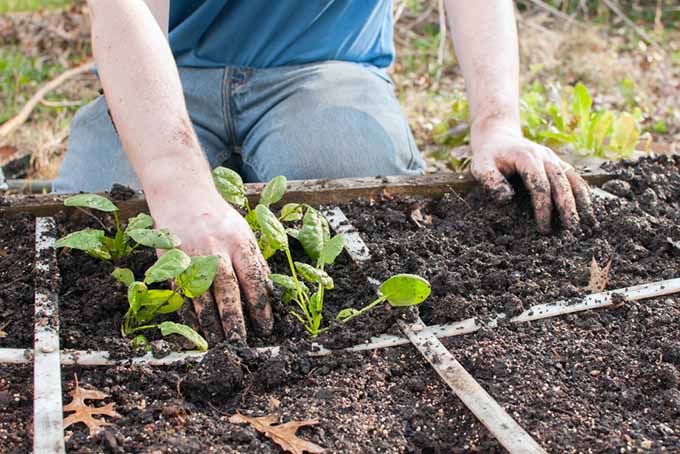
Overlay a foursquare foot grid atop your box for institute spacing, so plant your seeds.
iv. Get Growing!
H2o, grow, and presto!
All of these steps seem pretty simple, right? Nothing new to nearly of you green thumbs out in that location.
Merely you might have noticed the obvious thing that makes this method unlike from other techniques: the square pes filigree.
According to Bartholomew'southward canon, this grid is typically an easy-to-make, homemade measuring tool crafted from long, thin slats of wood (especially board) that are then cross-hatched and fashioned into square foot-sized squares.
This grid is then attached atop 1's 4-past-iv foot wooden beds, and used to measure out and designate specific ane-by-1-pes planting areas for diverse herbs, veggies, and more.
If you're not the handyman (or handywoman) type, these grids tin can exist institute for purchase on Amazon, primarily made of fiberglass textile.
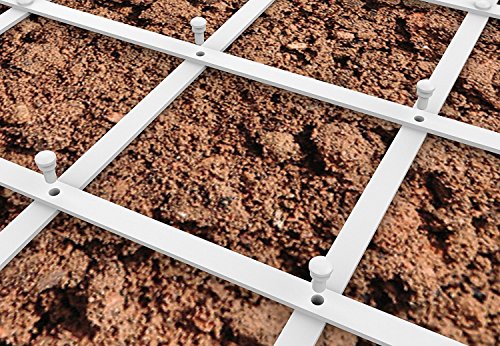
Mr. Garden Grid Kit
Or, yous tin build your own with wooden lath, though I have too seen gardeners and farmers use a temporary string-and-post setup to bandage their measurements instead of wood.
Growing on the Grid
It'south these grids that create the magic of the whole concept, and which in turn aid to make the whole endeavor of gardening this way so easy.
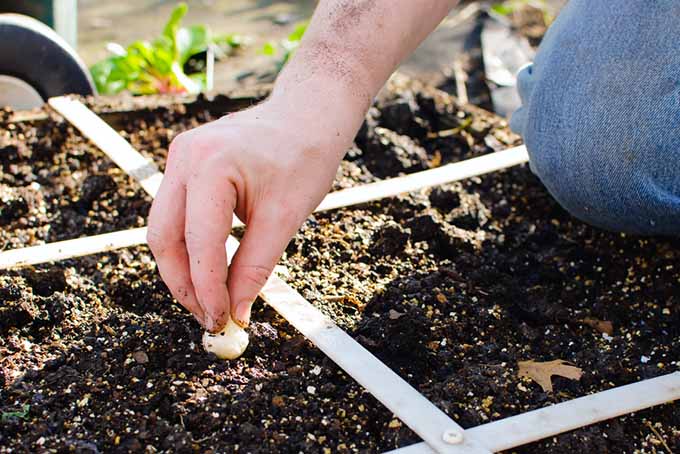
Information technology's simple: certain vegetables are planted in certain amounts (the number depending on the institute) within each foursquare, at their ideal distances from one another. This then maximizes each plant's infinite and food use while crowding out weeds equally a living mulch, allowing you to grow more veggies in a small-scale space, and even boosting plant health through companion planting (which we'll go to afterward).
Depending on the type of vegetable, herb, or even fruit that y'all are planting, ane merely plants so many seeds or seedlings inside each foursquare in a continuous grid-like spacing – while the bodily filigree itself helps to measure and keeps your rows looking neat!
But put, all you really have to exercise is consider the number of plants y'all need per square, plant them, and make sure to space them at healthy distances in a grid formation inside the larger grid.
It'south wonderfully easy – no doubt one of the reasons why it'southward a technique that'south caught on like wildfire!
Below, we share the full general number and spacing rules for the most common vegetables yous might like to plant in your square foot garden.
1-Per-Square Plantings
Simply form one pigsty in the center of the 1-by-1-pes square of your choice, and plant your seeds (or transplant your seedling), keeping in heed the seeding techniques and layout guidelines that y'all'll find later in this article.
- Celery
- Corn
- Eggplant
- Kale
- Lettuce (head)
- Okra
- Oregano
- Parsley
- Peppers
- Potatoes
- Rosemary
- Sweet potatoes
- Tomatoes (staked)
2-Per-Square Plantings
Found these seeds side by side within the square, at the recommended seeding distance with an appropriate support trellis.
- Cantaloupe
- Cucumbers
- Pumpkins
- Watermelons
- Winter squash

(Up to) iv-Per-Square Plantings
Institute these in a foursquare with each seed or plant forming one of the 4 corners. They should exist placed at equal distances from each other and from the border of the grid, with one hole close to each corner of the square space.
Equally noted, some of these veggies exercise not necessarily have to exist planted 4 per square. If y'all want to grow a footling less food, yous may do so.
- Basil
- Garlic (for growing larger bulbs)
- Kohlrabi
- Leeks (for growing larger plants)
- Lettuce (leaf)
- Onions (for growing larger bulbs)
- Winter radishes
- Rutabaga
- Summer squash (with muzzle)
- Swiss chard
- Tomatoes (with muzzle)
- Zucchini (with muzzle)
(Upwardly to) 8- or ix-Per-Square Plantings
Found these in a grid- or foursquare-like pattern within the square space (i.e. three plants long by 3 plants wide, forming either a foursquare or a square-shaped band edge, simply making sure that they are equidistant from one some other and the border of the filigree.
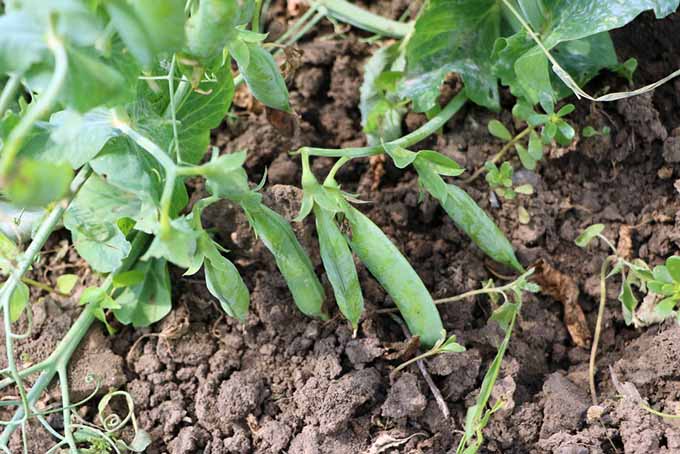
Similar with iv-per-foursquare plantings, don't feel pressured to constitute that many of each vegetable if you lot don't necessarily want that much nutrient!
- Dark-green beans (bush or pole)
- Beets
- Cilantro
- Garlic (smaller bulbs harvested, simply more plants)
- Leeks (smaller only more than plants)
- Onions (smaller but more plants)
- Peas
- Spinach
- Tomatoes (with no supports)
- Turnips
(Up to) sixteen-Per-Foursquare Plantings
Plant these in a grid or square pattern within each square space (i.east. a maximum of 4 plants long past 4 plants wide). Make sure they are equidistant from each another and the edge of the filigree to avert crowding.
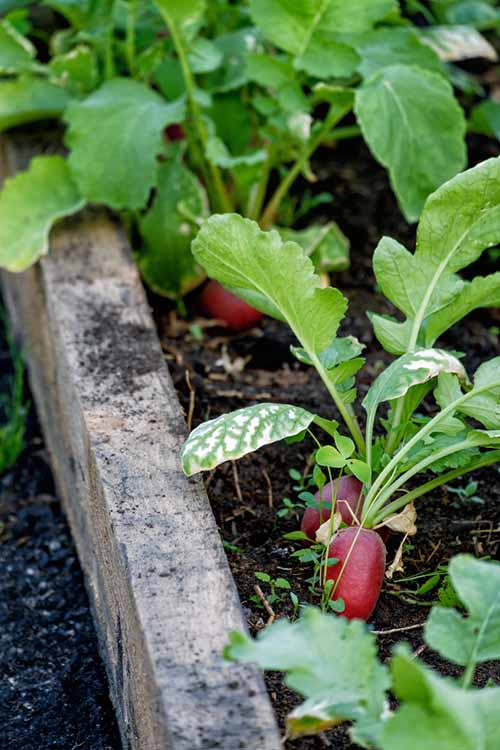
If you don't plan to thin or pick any of these vegetables for quite awhile, plant less if yous like – yous might prefer to employ the 8- or nine-per-foursquare spacing method. This will allow their root size to grow larger without leading to bolting or affliction.
- Carrots
- Parsnips
- Radishes
(Up to) 2-Per-4 Planting Squares
The veggies in this category demand LOTS of space to flourish, and a more circuitous arrangement of the foursquare grid method is required than for other crops.
Depending on the number you wish to plant, simply make certain they take ample space from one another and the sides of the grid.
- Broccoli
- Brussels sprouts
- Cabbage
- Cauliflower
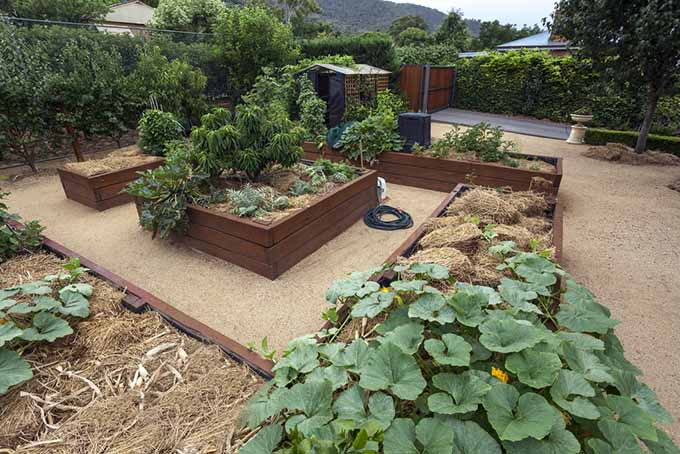
What About Perennial Vegetables?
Unfortunately, some vegetables simply aren't platonic for the foursquare foot garden, namely perennials that crave more space to abound. The foliage of these plants grows too big and creates too much overshadowing to grow in a companion planting manner close to other veggies in a garden.
These include:
- Artichokes
- Asparagus
- Rhubarb
The ferns of full-grown asparagus would fall over onto other plants, as would the growth of artichokes and rhubarb. Y'all'll accept to go along these separate!
Another unique attribute of this gardening technique is found in the manner you plan your growing space – or more specifically, where every plant and veggie is going to go within that space, in guild to go the maximum benefits out of your small-scale garden.
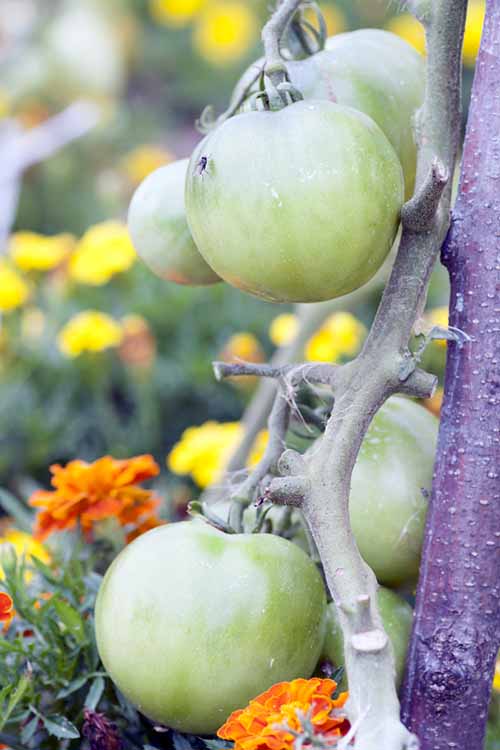
Techniques like companion planting are a big part of this, too – namely, the mutually benign inter-planting of different species with one some other for natural perks similar insect resistance and affliction prevention.
Within your 4-by-iv-human foot infinite, carefully selecting the type of plants that you plant together – and fifty-fifty where y'all plant them within your container, and within each infinite of the grid – is very important.
Y'all tin use the following tips in combination with the grid setup guidelines described above to plan which squares will be best for which plants, especially if yous're planting many different things.
Making a mock-up and getting all of your organisation ideas downward on paper is a groovy thought for this part of the planning process!
Below is a list of the all-time companion planting layout tips for your foursquare pes garden – so you tin produce the most productive, happy, disease-free, and harmonious harvest possible!
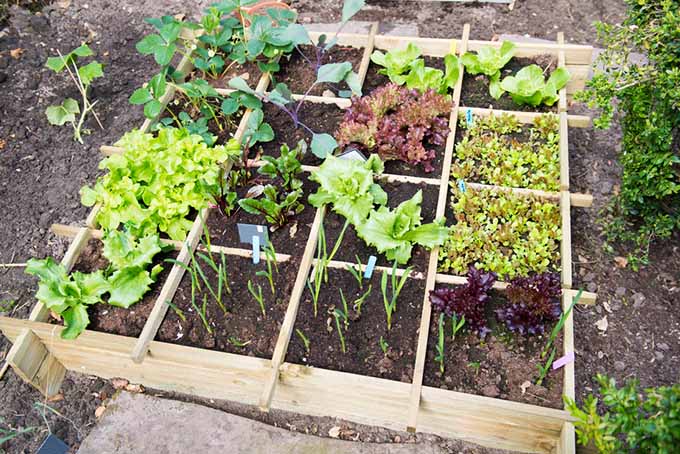
The exact placement of these companion plantings in your square foot garden is important.
Companion Planting Tips
Not all plants get along. Some compete with ane another for nutrients, or attract harmful pests that can be detrimental to certain plant neighbors.
On the other hand, some special pairings practice exactly the opposite: they bring out the very all-time in each other, concenter the right insects or pollinators, and create the perfect salubrious balance.
Earlier planting your seeds (or transplanting your seedlings) into your raised bed, do the necessary research to make up one's mind what you should establish together within each square.
Stay tuned for a deep dive into companion planting in the very near future.
Adopt and adhere to these very straightforward guidelines for the best results – specially if y'all're companion planting in your bed (and y'all should be)!
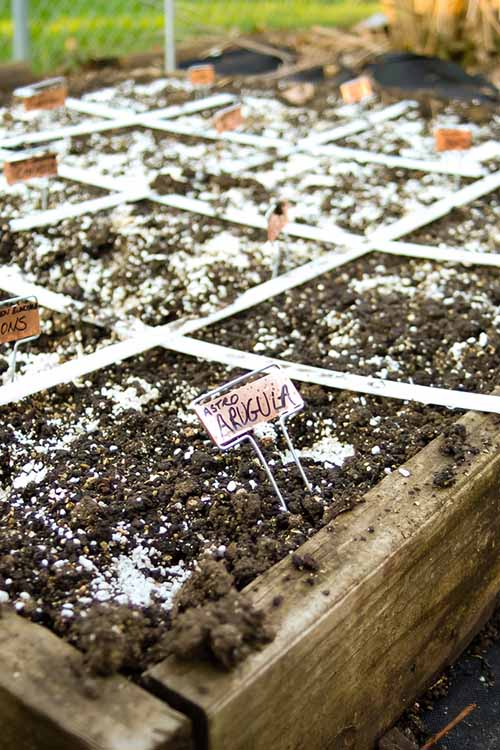
No Monoculture
Ever plant your square human foot garden with a variety of mutually benefitting plants, since one variety planted closely together will attract more pests and disease.
Keep Height in Listen
If planting short sun- and heat-loving plants with taller ones, make sure to found taller veggies (e.g. tomatoes, peppers, and eggplants) on the north side of your bed to allow shorter ones (similar basil, bush beans, celery) to get their share of the lord's day's rays.
On the other mitt: If mixing tall plants with a alloy of shade- and oestrus-loving plants, constitute your tall ones correct in the middle. Plant shade-lovers on the due north side of them, and heat-lovers on the due south side.
Border with Veggie Protectors!
Edge your growing infinite with alliums (i.e. onions, garlic, leeks, shallots) since these repel insects and pests (simply keep them far from beans).

Add a Flourish of Color (and Pest Control)
Planting certain herbs and flowers – such as sage with brassicas, or marigolds with nightshades – helps to repel certain insects like egg-laying butterflies and nematodes.
Starting Out
Then you've decided which veggies you want to abound in your picayune garden – and now you lot know exactly how many to put into each foursquare.
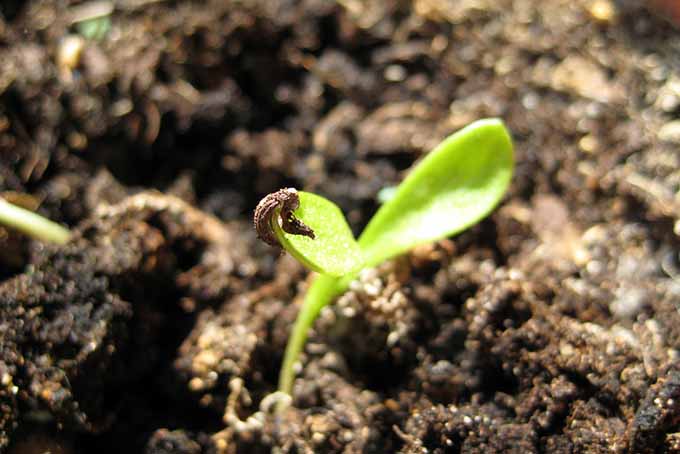
Here's the next step: getting them started from seed!
In the same vein equally planting using a grid, square foot gardening employs its own unique approach to seed starting. This involves thinning out weak seedlings so yous only give nourishment to the strongest, most (potentially) successful ones for the most productive garden.
When planting seeds:
1. Course Holes for Each Seed
First, form holes in each foursquare using your finger or another tool, correlating to the number of plants y'all will be growing (which depends on the type – reference the list provided higher up).
Make sure holes are prepare in an equidistant, grid-like fashion within each square, so that plants are every bit spaced apart in their correct number – this arrangement will differ depending on the total number (either 1, 2, iv, 9, or xvi).
ii. Place and Constitute Your Seeds
Plant ii to 3 seeds of your called vegetable in each pigsty. Encompass lightly with soil, then h2o.
3. Watch Them Grow
Once sprouted, choose the strongest-looking seedling from each prepare of two-3 seeds that yous have planted and remove the others to requite information technology clearance. This will get your final, full-grown vegetable or herb!

Some may choose to direct seed straight into their bed, equally the instructions in a higher place demonstrate. Nonetheless, lovers of the seed-starting and transplanting tradition don't have to change their ways to make this gardening method piece of work.
Planting advisable veggies (i.e. those that practise well with transplanting) in smaller containers start, and then sizing them up before transplanting into their terminal space, works just equally well if you enjoy that method – and especially if you want to get started earlier on your garden indoors during common cold seasons!
Setting the Stride
Once your seedlings and sprouts are well on their style in your square pes garden – well, yous know the rest!
H2o regularly, harvest, and savour. You'll exist amazed by how much nutrient yous can cultivate in such a modest space, and with then little work required once your seedlings accept sprouted. And once you've harvested everything you can eat, it'due south shockingly simple to plant some other succession and take delicious veggies again in no fourth dimension.
If some seedlings don't practice so well, just plant new seeds in their place. However, it's wise in more crowded squares (such as in eight-, 9-, and 16-plant spacings) to await for other successful veggies in the same plot to achieve maturity and harvest first, and so they don't overshadow and crowd out your tiny new plant introductions.
Non only will you have a flourishing, quaint food garden with minimal endeavour in comparing to what it takes to manage a full-sized one, you'll also see significant savings in terms of your food budget.
Who doesn't desire fresh, homegrown produce straight from their own yard (and the fruit of their own labors) and from their very ain easily? Zilch beats veggies you grow yourself.
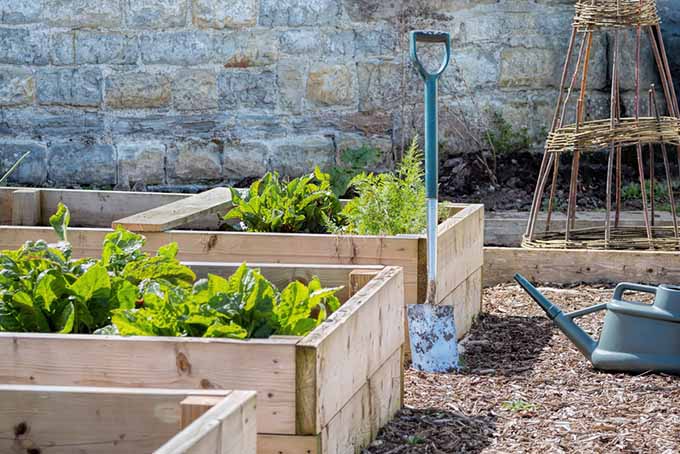
Y'all can as well practice this method with practically no change, potential negative consequences, or harm to your space. There's no need to dig up your garden soil – you tin can ready up your foursquare foot garden on your patio, balcony, or lawn without breaking any soil (or fifty-fifty a sweat)!
Of form, keep in mind that not all raised beds may be appropriate for all surfaces. With any bed you lot build or buy, await into the details on where the all-time setup should take place without creating drainage problems, rot, or damage to the surface blow, depending on your product or pattern.
hernandezfatichaddent.blogspot.com
Source: https://gardenerspath.com/how-to/design/guide-to-square-foot-gardening/
0 Response to "what to plant in a 4 x 4 garden"
Post a Comment